Why Is My House So Cold in the White Mountains? The Complete Guide to Cold-Climate Insulation in Snowflake, AZ
If you've spent a January morning in Snowflake standing over a floor vent in your socks, waiting for the furnace to catch up while a draft slides across the kitchen floor, you already know something most marketing about "Arizona homes" gets wrong. This isn't Phoenix. At 5,686 feet, Snowflake and the surrounding White Mountains — Taylor, Show Low, Pinetop-Lakeside, Heber-Overgaard, and the rest of Navajo County — sit in a genuine four-season, cold-climate zone. January's average high is around 46°F, the average low sits near 28°F, and the region picks up roughly a foot of snow most winters, spread mostly across November through April. Frost risk lingers into early June and can return by late September. That's not a desert winter. That's a mountain winter, and it puts real, sustained stress on a house that was built — or insulated — without that climate in mind.
This guide walks through exactly why heat escapes a White Mountains home the way it does, why Snowflake's building-science reality is nearly the opposite of Phoenix's, what R-value targets actually apply here, and how each of our services solves a specific piece of the problem — from a drafty ranch home to a manufactured home with an uninsulated belly. By the end, you'll know exactly what's happening in your walls and attic, and what it takes to fix it.
Arizona Is Not One Climate — And Snowflake Proves It
Most insulation advice aimed at "Arizona homeowners" is written for the low desert — Phoenix, Tucson, the Valley — where the entire building-science conversation revolves around keeping brutal summer heat out and running the air conditioner efficiently. That advice doesn't just fail to help a Snowflake homeowner; it can actively point you in the wrong direction. Under the International Energy Conservation Code (IECC), Phoenix sits in Climate Zone 2 — hot and dry, cooling-dominated. Snowflake and the rest of Navajo County's high country sit in Climate Zone 5 — a cold, heating-dominated zone that shares more in common, building-science-wise, with parts of Colorado or the upper Midwest than it does with the Valley two hours south.
- Phoenix (Zone 2B): The building code is written to keep intense summer heat OUT. Walls are typically only required to hit around R-13. Cooling load dominates the energy bill.
- Snowflake (Zone 5): The building code is written to keep hard-won heat IN. Attics are targeted at roughly R-49, and walls are targeted at roughly R-20 — meaningfully more insulation than a Phoenix code minimum requires. Heating load dominates the energy bill for most of the year.
- Summer does happen here — highs occasionally push into the high 80s — but it's a secondary, short-season concern. The primary year-round job of your building envelope in Snowflake is heat retention, not heat rejection.
Why Heat Actually Escapes a House at 5,686 Feet
"My house is cold" usually gets blamed on the furnace. Sometimes that's true. Far more often, the furnace is working fine — it's just losing the fight against a building envelope that's leaking heat faster than the equipment can replace it. There are two distinct mechanisms at work, and understanding the difference matters because they call for different fixes.
Conduction: heat moving straight through your building materials
Conduction is heat moving directly through a solid material — through drywall, through a stud, through an under-insulated attic floor — from the warm side (your living room) to the cold side (the outside air, or a 28°F attic). This is the mechanism R-value is built to resist. The higher the R-value of the material in that wall or ceiling assembly, the slower heat conducts through it. At elevation, with genuinely cold outdoor air for months at a stretch, an under-insulated attic or wall cavity is bleeding heat around the clock, not just during a cold snap.
Infiltration: heat riding air straight out of the house
Infiltration is different — it's not heat moving through a material, it's warm household air physically escaping through gaps, cracks, and unsealed penetrations, while cold outside air is pulled in to replace it. Top-plate gaps, can-light housings, rim joists, plumbing and electrical penetrations, and the attic hatch are the usual suspects. Infiltration is often the bigger, more expensive problem in older White Mountains homes, because insulation alone does nothing to stop it — a wall can have decent R-value and still leak heat badly if it isn't air-sealed. This is also the mechanism behind that classic complaint: cold drafts at floor level, cold spots near outlets, and a furnace that never seems to catch up even though "the insulation looks fine."
What R-Value Actually Means for a Climate Zone 5 Home
R-value measures a material's resistance to conductive heat flow — the higher the number, the harder heat has to work to move through it. Because Navajo County's high country falls in IECC Climate Zone 5, the recommended targets here are noticeably higher than what a low-desert Arizona home needs, and higher than what many older Snowflake and Taylor homes were originally built with.
- Attic / ceiling: roughly R-49 is the general Climate Zone 5 target — a meaningful step up from the R-30-ish range common in low-desert Arizona construction.
- Walls: roughly R-20 (or an equivalent R-13 cavity plus continuous exterior insulation) is the general Zone 5 target, versus roughly R-13 alone in a Phoenix-zone wall.
- Floors, crawlspaces, and rim joists: these deserve real attention here in a way they simply don't in the low desert, because cold floors and frozen plumbing are elevation-driven problems, not desert problems.
If you've been up in your attic and can still see the tops of the ceiling joists poking through the insulation, you're well under target — and you're paying for that gap every month propane or electricity is heating your home. The exact code edition your jurisdiction has adopted can vary in its fine print, but the R-49 attic / R-20 wall range is the right general planning target for this climate, and it's the number we design every insulation upgrade around.
Ice Dams: How They Form, and How to Stop Them
Ice dams are one of the clearest signs of an under-insulated, poorly air-sealed attic, and they're a distinctly cold-climate problem — something a Phoenix contractor rarely thinks about, but something every White Mountains roof is exposed to most winters.
The mechanism
Here's how it happens: heat escaping from your living space into an under-insulated attic warms the underside of the roof deck unevenly. That warmth melts the bottom layer of snow sitting on the upper part of the roof, even while the outside air stays well below freezing. The meltwater runs down the roof slope until it reaches the colder eaves and overhangs — areas that stay cold because they're not directly over heated living space — and refreezes there into a ridge of ice. That ridge, the ice dam, then backs up more meltwater behind it, which can work its way under shingles and into the roof deck, attic insulation, and eventually ceiling drywall.
Prevention
- Bring attic insulation up to the Zone 5 target (roughly R-49) so significantly less heat reaches the underside of the roof deck in the first place.
- Air-seal the attic floor — top plates, can lights, duct penetrations, the attic hatch — since warm air leaking directly into the attic causes ice dams just as reliably as poor insulation does.
- Balance attic ventilation (soffit intake and ridge or roof exhaust) so the entire underside of the roof deck stays close to outside temperature, rather than warming unevenly.
- Address the problem at its source in the attic rather than relying only on roof-edge heat cables or ice-and-water shield, which manage symptoms rather than the underlying heat loss.
Frozen Pipes: Why They Happen and How Insulation Prevents Them
Frozen and burst pipes are a routine cold-weather call across Navajo County's high country, and they trace back to the same root cause as a cold living room: heat escaping where it shouldn't, and cold air getting in where it shouldn't. Pipes running through an uninsulated crawlspace, an exterior wall with gaps in the cavity insulation, or a manufactured home's unsealed belly are all exposed to outside-range temperatures even though they're technically "inside" the structure. When water inside a pipe freezes, it expands — and that expansion is what cracks fittings and splits pipe walls, often not discovered until the thaw, when a split pipe starts leaking or spraying.
- Insulate crawlspaces and rim joists so the space around plumbing runs stays well above outside air temperature.
- Air-seal foundation vents, sill plates, and any gap where outside air is tracking directly along a pipe run.
- Insulate exterior walls that carry plumbing to code-appropriate R-value, since a thin or gapped wall cavity offers pipes very little real protection.
- For manufactured and mobile homes, make sure belly-wrap and skirting are intact and properly insulated — this is the single most common source of frozen-pipe calls in that housing type locally.
Manufactured and Mobile Homes: A Different Set of Problems
Manufactured and mobile homes make up a significant share of housing across rural Navajo County, and they face cold-climate challenges that site-built homes generally don't. The underbelly — the wrapped, insulated cavity beneath the floor that houses ductwork and plumbing — is exposed to outside air on all sides rather than sitting over a conditioned basement or a well-insulated crawlspace. When belly-wrap tears, sags, or was never properly insulated to begin with, the entire floor system loses heat directly to the cold air underneath the home, which shows up as cold floors, high propane usage, and a meaningfully higher risk of frozen pipes and ductwork.
Skirting plays a bigger structural role than most owners realize, too — it's not just cosmetic. Intact, properly insulated skirting blocks wind from scouring cold air directly across the belly-wrap, which is exactly the kind of wind-driven infiltration loss that drives up heating costs in an exposed, elevated home. Between belly-wrap condition, skirting integrity, and the manufactured-home industry's historically thinner wall and ceiling cavities compared to site-built Zone 5 targets, these homes often have the most room for improvement — and often see the most noticeable comfort and bill difference after an upgrade.
Every Service We Offer, and the Specific Job It Does
"Add more insulation" isn't always the right answer by itself — the right fix depends on what's already there, where the home is losing heat, and what kind of structure you're working with. Here's how each of our services fits into solving the cold-house problem.
Spray Foam Insulation
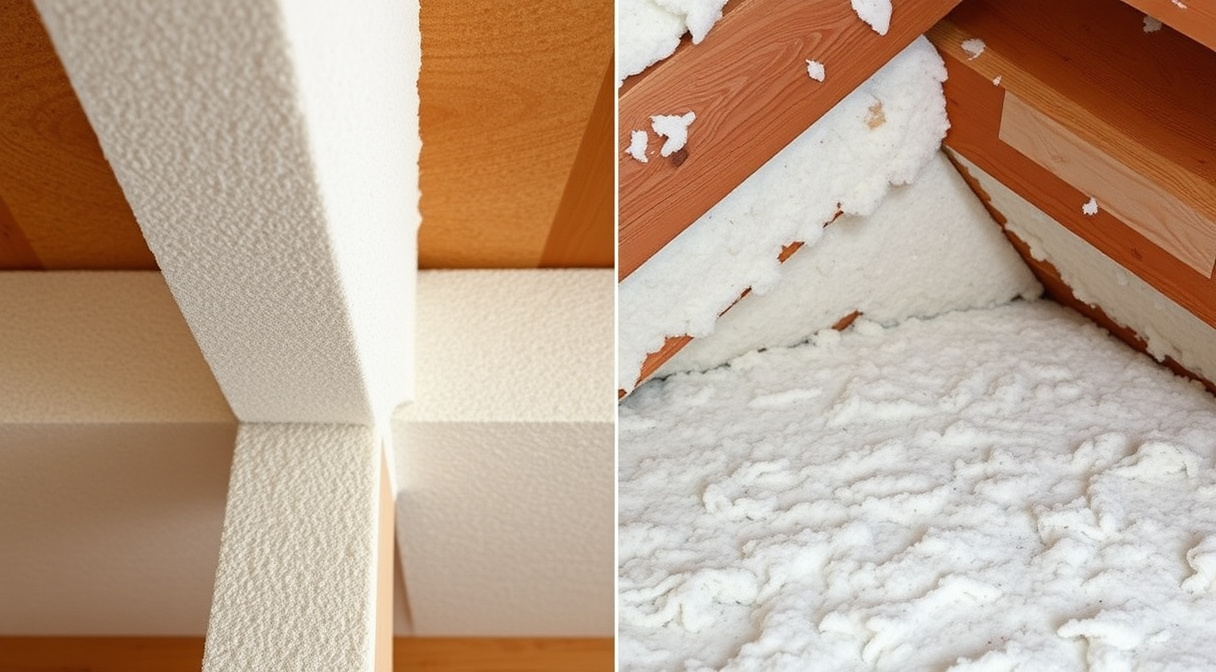
Spray foam insulates and air-seals in a single application, expanding to fill every gap, seam, and penetration as it cures. For rim joists, vaulted ceilings, and other tight or irregular cavities where infiltration is the main problem, spray foam delivers the highest R-value per inch of any common option and closes air-leak pathways that loose-fill or batt products simply can't reach on their own.
Attic Insulation
This is the umbrella service for bringing your attic up to the Zone 5 target of roughly R-49: measuring current R-value, air-sealing the attic floor first, then adding the right material to reach target depth. Since the attic is the single biggest source of heat loss — and the direct driver of ice dam formation — this is usually the highest-return project in the house.
Blown-In Insulation
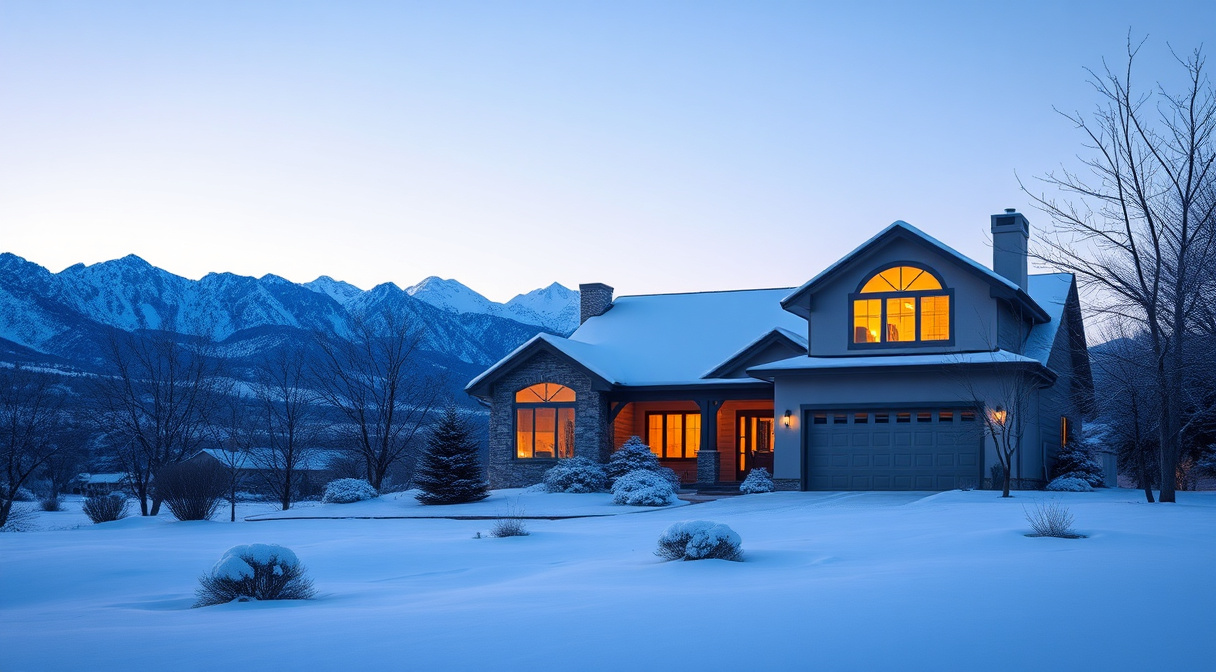
Blown-in cellulose or fiberglass is the fast, cost-effective way to bring an under-insulated or settled attic floor up to target R-value without a full tear-out. It's blown through a hose and flows evenly around trusses, wiring, and obstructions, which means far fewer gaps than hand-placed material — a strong fit for topping off older Snowflake and Taylor homes.
Batt & Roll Insulation
Batts remain a solid, economical choice for open wall framing, garage ceilings, and new-construction stud bays where the framing is exposed and accessible. Properly installed — cut to fit, no compression, split around wiring rather than compressed over it — batts deliver reliable R-value at a lower material cost than spray foam.
Air Sealing & Weatherization
This is the fix for infiltration specifically: sealing top plates, can-light housings, duct penetrations, rim joists, and the attic hatch so warm air stops leaking out and cold air stops working its way in. In many older White Mountains homes, air sealing delivers a bigger comfort improvement per dollar than adding more insulation alone, because it addresses the mechanism insulation can't touch.
Ice Dam & Pipe Freeze Prevention
A combined attic insulation, air-sealing, and ventilation approach aimed specifically at stopping the heat-loss pattern that causes ice dams, paired with insulating exposed plumbing runs in crawlspaces, rim joists, and exterior walls to keep pipes above the freeze line even during a hard cold snap.
Mobile & Manufactured Home Insulation
Belly-wrap repair and insulation, skirting insulation and repair, and underfloor insulation upgrades built specifically for manufactured and mobile home construction — addressing the cold-floor, high-propane-bill, and frozen-pipe issues that are especially common in this housing type across rural Navajo County.
Garage, Crawlspace & Rim Joist Insulation
Unheated and semi-heated spaces — garages, crawlspaces, and rim joists — are common sources of cold floors and drafty adjacent rooms. Insulating these transition spaces stops them from acting as a direct thermal bridge between your conditioned living space and the outside cold.
New Construction Insulation
For builders and homeowners planning a new home or addition in Snowflake, Taylor, or Show Low, this is whole-home insulation designed in from the start — spray foam, batt, and attic systems coordinated with framing and HVAC so the home meets Climate Zone 5 code targets from day one instead of needing an upgrade five or ten years in.
Insulation Removal
Old, rodent-contaminated, or water-damaged insulation isn't something to insulate over — it has to come out first. This is common in older White Mountains homes after a roof leak, an ice-dam-related water intrusion, or a long-term pest issue, and it always comes before any new insulation goes in.
What This Actually Means for Your Heating Bill
Natural gas is largely unavailable across rural parts of Navajo County, so most White Mountains homes heat with propane, electric resistance, or an electric heat pump — all of which get noticeably more expensive to run when a house is losing heat through an under-insulated attic, leaky top plates, or an exposed manufactured-home belly. We won't hand you an invented precise percentage, because every home's starting point is different — a home currently sitting at R-13 in the attic has far more room to improve than one already at R-38. What we can tell you honestly: bringing an under-insulated attic and leaky envelope up to Zone 5 targets is consistently one of the highest-return home improvements available in this climate, because unlike a lot of upgrades, it keeps paying you back every single heating season for the life of the material.
On the incentive side, don't assume 2026 works the way it used to. The federal 25C and 25D energy-efficiency tax credits expired December 31, 2025, so they should not be counted on for a 2026 insulation project. What is currently available: the statewide Efficiency Arizona / HOMES-HEAR program, which offers weatherization and insulation rebates up to roughly $1,600 per project depending on eligibility. It's also worth asking about energy-audit and weatherization-assistance programs through your local electric cooperative — rebate programs and eligibility rules shift over time, so we'll help you check what's currently available for your address before you finalize a budget.
Getting Your House Actually Warm This Winter
If your furnace runs constantly and the house still feels cold, if you've noticed ice dams along your eaves, if a pipe has already frozen once, or if you own a manufactured home with cold floors and a propane bill that doesn't match its size — the pattern is almost always the same one described in this guide: heat conducting out through under-insulated surfaces, and warm air leaking out through unsealed gaps, at an elevation and in a climate zone that gives that heat loss nowhere to hide. The fix is specific to your home, not generic, and it starts with actually seeing what's happening in your attic, walls, and crawlspace rather than guessing.
We serve Snowflake, Taylor, Show Low, Pinetop-Lakeside, Heber-Overgaard, Holbrook, and the surrounding White Mountains communities with the full range of cold-climate insulation work covered above — spray foam, attic insulation, blown-in, batt, air sealing, ice dam and pipe-freeze prevention, manufactured-home belly-wrap and skirting, garage and crawlspace work, new construction, and insulation removal. Call 844-967-5247 or email josh@contractorschoiceagency.com for a straightforward assessment of what your home actually needs before the next cold snap hits.
Frequently asked questions
Snowflake sits at roughly 5,686 feet in IECC Climate Zone 5 — a genuine cold, four-season climate with January highs around 46°F, lows near 28°F, and roughly a foot of snow most winters. That's a fundamentally different building-science reality than low-desert cities like Phoenix, which sit in a hot, cooling-dominated Climate Zone 2. In Snowflake, the building envelope's main job is retaining heat, not rejecting it.
The general Climate Zone 5 target is roughly R-49 for attics and roughly R-20 for walls (or an equivalent R-13 cavity plus continuous exterior insulation). That's higher than the code minimums used in low-desert Arizona construction, reflecting the fact that this region has real, sustained winter heating load.
The federal 25C and 25D energy-efficiency tax credits expired December 31, 2025 and are not available for 2026 installations. The statewide Efficiency Arizona / HOMES-HEAR program currently offers weatherization and insulation rebates up to roughly $1,600 per project depending on eligibility, and it's worth asking about energy-audit and weatherization-assistance programs through your local electric cooperative. Rebate rules change, so confirm current details before finalizing a budget.
Ready for a free quote?
Tell us about your home and we'll build a clear quote — rebates included.