Air Sealing & Weatherization in Snowflake, AZ
Draft-stopping, rim joist sealing, and top-plate sealing that shuts down the wind-driven infiltration behind cold floors, drafty rooms, and stubbornly high propane bills at 5,686 feet.
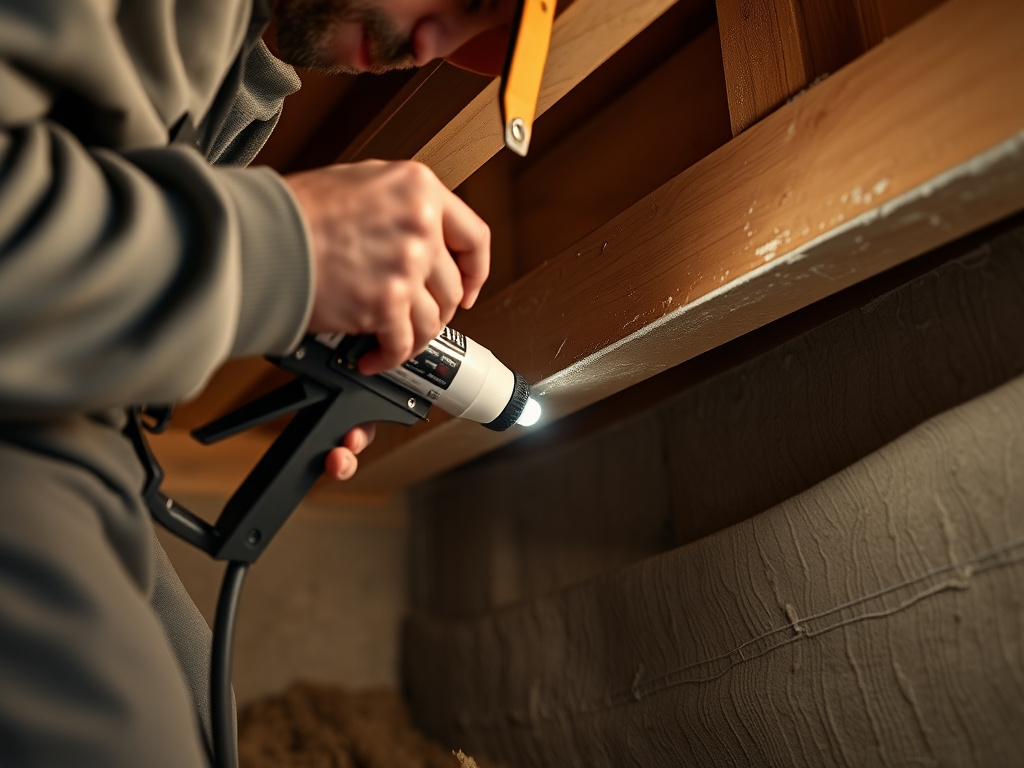
Homeowners who add insulation and still feel a draft are usually running into a problem insulation alone can't fix: moving air. Insulation slows down heat trying to pass through a solid material like an attic floor or a wall — but it does very little to stop air itself from finding a path through a gap, a crack, or a poorly sealed penetration. At 5,686 feet, exposed to open wind across Navajo County, that kind of infiltration can account for as much heat loss as an under-insulated attic, and in a lot of Snowflake and Taylor homes, it's the actual reason a room stays cold no matter how much the furnace runs.
Air sealing and weatherization is a whole-home approach to shutting that down: sealing top plates where wiring and plumbing pass from the living space into the attic, sealing rim joists and band areas exposed to wind at the foundation line, closing gaps around penetrations, and weatherstripping doors and windows that have gone slack over the years. For a lot of homes, this is the single most cost-effective fix available — cheaper than a full re-insulation, and it often makes a bigger difference in how a house actually feels day to day.
Why homeowners choose it
- Directly targets the drafts that make a well-insulated home still feel cold
- Reduces the wind-driven infiltration common in exposed White Mountains locations
- Frequently the single most cost-effective fix for a high propane or heat-pump bill
- Stops warm air from escaping through top plates and attic penetrations
- Complements attic and wall insulation instead of duplicating it
- Often the first item covered under weatherization assistance programs
Why air sealing often matters more than adding insulation
Insulation and air sealing solve two different problems, and it's common for a home to be reasonably well-insulated and still lose a lot of heat because nobody addressed the second one. Conductive heat loss moves slowly through insulated materials; infiltration is air physically moving through your walls, ceiling, and floor system — and at elevation, with real wind exposure across open White Mountains terrain, that moving air can carry off heat faster than most homeowners expect.
That's why a house can have a decent attic R-value and still run the furnace nonstop on a windy January night. Sealing the air pathways first, then making sure the insulation layer is intact, is usually the more effective order of operations — and often the more affordable one.
Where the leaks actually are
Air leakage rarely happens where you'd expect it. The biggest culprits are usually out of sight: the top plates where interior walls meet the attic, rim joists and band areas around the foundation perimeter, and every penetration where a pipe, wire, or duct passes through an exterior wall or ceiling. Attic hatches and recessed lighting fixtures are two more common offenders that get overlooked in a typical insulation-only job.
- Top plates and wall-to-attic transitions
- Rim joists and band areas around the foundation perimeter
- Plumbing, electrical, and duct penetrations through exterior walls and ceilings
- Attic hatches and recessed lighting fixtures
A guided approach — not guesswork
Rather than sealing at random, we prioritize the leaks that actually matter for your specific home. Navopache Electric Cooperative offers energy audits and can connect members to NACOG Weatherization Assistance, and where an audit's already been done, we use those findings directly. Where one hasn't, our own assessment identifies the biggest air-leakage points before we start sealing, so the work goes where it will actually move the needle on comfort and your heating bill — not just wherever's easiest to reach.
Ideal for
- Homes that feel cold or drafty even though the attic is already insulated
- Rooms with noticeably cold floors along exterior walls
- Older homes with visible gaps around plumbing, wiring, or the foundation sill
- Anyone whose home energy audit flagged air leakage as a concern
- Manufactured and site-built homes exposed to open wind on their lot
What affects the cost
Air Sealing & Weatherization questions, answered
Insulation slows heat loss through solid materials, but it doesn't stop air movement. If top plates, rim joists, and penetrations aren't sealed, cold air can infiltrate and warm air can escape fast enough to leave a well-insulated home still feeling drafty.
Air sealing closes the actual gaps and cracks that let air move between conditioned and unconditioned space — top plates, rim joists, penetrations, and similar spots. Insulation slows conductive heat loss through a material. A well-performing home needs both, and air sealing is often the more cost-effective fix to start with.
Yes, often significantly. Wind-driven infiltration is a major driver of furnace and heat-pump runtime at Snowflake's elevation, and sealing the main leak points is frequently the single most cost-effective way to bring a propane or electric heating bill down.
It helps but isn't required. Navopache Electric Cooperative offers energy audits and weatherization assistance connections. If you haven't had one, we can do our own assessment to identify your home's biggest leak points before we start work.
Air Sealing & Weatherization done right, by a local Snowflake crew
Air Sealing & Weatherization isn't a commodity — the result depends entirely on how carefully it's planned and installed for your specific home and a genuine White Mountains winter. We assess what your house actually needs, prep the space properly, and install to your target R-value, so the work delivers the comfort and heating savings it's supposed to. No shortcuts, no builder-grade rush.
We serve Snowflake, Taylor, Show Low, Pinetop-Lakeside, Holbrook, Heber-Overgaard, Springerville, Eagar, and St. Johns, and we'll help you check the Efficiency Arizona weatherization rebates that bring your project cost down. Every job starts with a free, no-pressure quote.
Just as important, we treat your home like the system it is. Insulation, attic ventilation, and air sealing all interact, and getting one right while ignoring the others leaves comfort and savings on the table. When we scope your air sealing & weatherization, we look at how it fits the whole picture — so the finished result performs the way it should, holds up through a real 5,686 ft winter, and actually lowers the heating bill you feel every month. That whole-home mindset, plus honest advice about what your house truly needs, is what our neighbors across the White Mountains count on us for.
Free assessment
We evaluate your home and give you a clear, itemized quote with rebates factored in.
Expert install
We prep and install your air sealing & weatherization to spec — clean and on schedule.
Savings you can feel
A cooler home, lower cooling bills, and help claiming every rebate you qualify for.
Related services
Ready for a free air sealing & weatherization quote?
Tell us about your home and we'll put together a clear, no-pressure quote — plus walk you through the weatherization rebates you may qualify for.